FZ
4.0Reviewed Sep 27, 2016
Very Interesting! I would extend the part on the biological passport and give more details on how the adaptive model algorithm works.
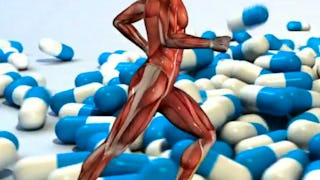
The objective of this course is to encourage a critical understanding of doping. To achieve this goal, this course will rely on a multidisciplinary approach that allow you to see how different disciplines get into a single object, in different perspectives and in often complementary ways. This approach will also allow us to appreciate the complexity of a subject like doping. Doping in sports is a complex practice whose definition and identification is the result of socially and historically constructed norms. This course offers to shed light on the processes that led to the use and prohibition of doping substances. Performance enhancement or physical transformation are two aspects of doping which are seen as problematic, yet even as we speak companies are making fortunes selling body improvement and other forms of “human enhancement” to us. These apparent contradictions will be analysed to show that beyond sanitary questions, doping raises many social, scientific and legal issues. In efforts to control doping, governments and sports authorities have put into place institutions responsible for defining what falls into the category of doping, but also what prevention, repressions and research methods to put into effect. This course will also explore biological control measures such as the biological passport, key legal dimensions, organisations that produce performance, as well as the sociological dimensions of doping. Besides the Professors of University of Lausanne, the best experts of doping are involved in this course: experts from an Anti-doping Laboratory (LAD- Lausanne-Switzerland), from the CAS (Court of Arbitration for Sport), from the UEFA (soccer), and from the WADA (World Anti-Doping Agency). Teaser: https://www.youtube.com/watch?v=20Q3eR_g7rU Main Learning Outcomes At the end of the course the participants will be able to : 1. Identify the “cultural” dimension of doping, that is as a historical practice linked to the transformation of social norms, 2. Go from a binary way of thinking - for or against doping - to an understanding of the complexity of this phenomenon which is biological, psychological and sociological, all at the same time, 3. Recognize the institutions, the actors and the practices of the fight against doping, 4. Explain how the social and organisational context influences individuals decisions and how this influence can be reduced by effective prevention measures, 5. Identify how the fight against doping is led and how testing is carried out.
FZ
Very Interesting! I would extend the part on the biological passport and give more details on how the adaptive model algorithm works.
EM
Good graphics and great rhetoric of the instructors. Recommended!
TP
The course is very interesting but the translation was very bad.
VJ
An excellent course . I enjoyed learning anti doping. A well structured .
EP
Very specific course. For me as an amateur cyclist it's good to know the face of the enemy. Second week is great for it's sociological info.
AK
execellent course fro those who wish to broaden their understanding on the subject of doping
SS
Great course. Fulfill my knowledge needs about sports and doping.
SG
Very Informative course and as a Sports science researcher I must say this a must to do course.
GI
thank you for a wonderful course really enjoyed, and hope to see more courses.
GP
The teacher has a rather strong french accent. Sometimes I need to look at the script because of this.
NZ
It was a very good course i have to learn lots about dining in this course. thnks
JL
I loved this course. It fed my existing knowledge on doping in sport and has since influenced my behaviour as a coach.
Showing: 20 of 97
I'm doing degree in sport management and could say for 100% that is very useful practical information with good examples, also course give goo understanding of world of sports institutions. But the final test based on statements and only bicykle sport ? Ohh, ok. Anyway, thank you for the course. AK
This was a great course, I am grateful to the professors in take their time and all the people involved to make it possible for us to have this course, and a special thanks to coursera to make it possible. If you want to know understand more on the inner functioning and protocols of how things work at the WADA labs, this is a must course to enrol in.
This course was interesting but sometimes difficult to follow because of the long interviews that were dubbed into English, I lost concentration. This course needs an update (like many courses on Coursera) since it appears to be around 8 years old already. The quiz questions are sometimes difficult to understand because of convuluted language, even for someone who is a native English speaker. And the formatting of the quiz questions needs to be looked at because the multiple choice answers are spread out with lots of gaps which makes it difficult to see which one to check.
The course is very interesting but the translation was very bad.
The course it's great but need to be updated
The teacher seems to mainly read the slides and the tone is quite scholastic, not a lot or engagement. Indeed the course gives some info on the social background of doping, on how it is fought and it is adopted. Worth it if you have a strong interest in sports.
In the interviews, the English spoken translation didn't translate all of the French . Having English subtitles are enough I think. It was distracting hearing both the English and the French simultaneously.
interesiing historical background. Last 2 weeks are long, boring interviews with experts in the field.
The interviews are a little bit longs.
it's fine, not technical but ok
I did not like the structure and content of the course. Module 1 and 4 are ok. 2 & 3 are just interviews with a bad dub from french to english. The content is weirdly presented with the interviews.
Topic is fine but the delivery was not good.
The subtitles had a lot of mistakes, while trying to concentrate on translated discussions is really difficult and destractive too.
Content is too vast.So,I felt boring at times
Brilliant Course! Very in-depth, educative and precise. The revelations on Cycling, Body Building sports & Socio-psychological aspects of Doping were eye-opening! Will add great value add to the knowledge base of anyone wishing a career in Sports
Very interesting topic to learn more about, since it brings so much controversy in the world of sports. Grateful to have gained an insight from all the perspectives about doping to enlargen my understanding about this fascinating topic.
Fascinating information - from the history, to the sociology, to the legal framework and the science. It is a great course for anyone wishing to understand the bigger picture around doping and performance in sport
Very professional way to introduces the world of anti-doping system and associations to the people who are interest to know more about it and who would like to expand their knowledge regarding anti-doping process.
Good lesson on doping to understand why athletes take doping and what the effects are, was expecting a more in-depth discussion on doping in football but using the example of cyclists is good.
Very informative course that broadened my view on the matter of doping. From the outside, we tend to think of doping as "cheating", but the course proved to me that there is more to it.
Doping explained from a different view point, through its history and the `why`, informing about behaviour. I enjoyed it and learnt a lot. Thank you very much.