FD
5.0Reviewed Dec 7, 2023
Very interesting and challenging course. Recommended if you want to learn how to design your own custom inductors or transformers.
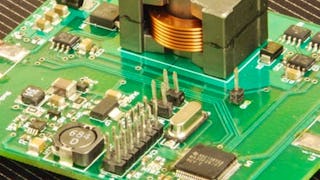
This course can also be taken for academic credit as ECEA 5703, part of CU Boulder’s Master of Science in Electrical Engineering degree. This course covers the analysis and design of magnetic components, including inductors and transformers, used in power electronic converters. The course starts with an introduction to physical principles behind inductors and transformers, including the concepts of inductance, core material saturation, airgap and energy storage in inductors, reluctance and magnetic circuit modeling, transformer equivalent circuits, magnetizing and leakage inductance. Multi-winding transformer models are also developed, including inductance matrix representation, for series and parallel structures. Modeling of losses in magnetic components covers core and winding losses, including skin and proximity effects. Finally, a complete procedure is developed for design optimization of inductors in switched-mode power converters. After completing this course, you will: - Understand the fundamentals of magnetic components, including inductors and transformers - Be able to analyze and model losses in magnetic components, and understand design trade-offs - Know how to design and optimize inductors and transformers for switched-mode power converters This course assumes prior completion of courses 1 and 2: Introduction to Power Electronics, and Converter Circuits.
FD
Very interesting and challenging course. Recommended if you want to learn how to design your own custom inductors or transformers.
OA
Deisgn of inductor,transformer are cruicial but generally not covered in other courseworks, it was very helpful to learn it.
I
More explanations or examples would help since this subject is rich in content
DS
Very great course to understand more in details the related design topics and constraints around Typical Magnetic components in Power Electronics
MU
An essential course for those looking to work as a Power Electronics engineer. Thank you to all who made this possible.
SN
Good course on fundamentals of Magnetics for Power Electronics
CE
Nicely paced with a foundation in the physics of electromagnetics leading to practical knowledge of transformer and inductor design.
GS
Great course, coming from Delft Structure Design Method and learning Middlebrook Design Oriented Analysis method was great.
ZG
It is wonderful and useful course to improve my skill for power electronic. I greatly recommend to my classmates . and friends.
CJ
Straightforward presentation of magnetic concepts and development of a systematic approach that can be iterated to produce any manner of magnetic devices used in dc switching converters.
CZ
Dr.Robert Erickson is my mentor in this area. Very clear and impressive. Appreciate.
DD
the interesting course , I had alot of things about it.
Showing: 20 of 38
The courses are very helpful and excellent. Though it is a shame that these courses are restricted for the people in several regions of the world due to the US gov. sanctions. I believe that learning should not be politicized.
After each test completion, I would like to see the right methods to take to the right solution. In this way, at least, the not answered questions will be checked out to see what was wrong with my procedure.
The Power Electronics specialisation comprises 4 courses at University of Colorado Boulder taught by Prof. Robert Erickson. I paid for the course and also the book "Fundamental of Power Electronics" by Prof Erickson and Prof Maksimović. The book is much more comprehensive than the course. The video and slides of the courses can also be found several times on youtube and other places on the internet. I booked the course and my expectation was that as a paying client I would have a better learning experience. Prof Erickson is a very good teacher and lecturer. I like the way he presents his slides and adds annotations with the Pencil. He seems to have started with MOOCs about 2013 and some of the slides are still have this timestamp. The content of the first course made me enthusiastic because it includes a hands-on introduction to LTSpice. In the following weeks, however, my enthusiasm waned somewhat. I'm interested in doing some practical work but also in the phenomenological understanding but not in setting up long formulas or calculating values in long formulas. But that's exactly what 2/3 of the knowledge is taught. And the exercises, which cost me twice as much time as the lecture, only consist of determining formulas or values. The last, course 4 week 4, exercise is finally only at high school level: finding the right formula from one of the slides and entering values. I would have expected more. Btw, the questions in the homework usually build on each other. This means that if you don't understand one of the first questions and can't find the answer, you can't answer the rest either. So you never get the necessary 70%. So you have to be creative because there is no help. In general, I sometimes took advantage of the fact that you can do the exercise as often as you like and simply tried out all the multiple-choice questions. You can also score a point or two by guessing. I would much rather have discussed my comprehension problems with the professor or a tutor or with fellow students. For me, who graduated from university 30 years ago, formulating problems, discussing them and helping others with their comprehension problems is the essential skill that a university should teach and that enable graduates to work in the industry as part of a team. Therefore, I find it very annoying that the learning community is non-existent but also that neither Prof. Erickson nor a tutor answers questions. In future, I will simply read text books. But maybe my expectations were just wrong. After all, the Coursera certificate for the 4 courses cost me about 180USD, while the same courses in the UC Boulder online programme cost 2668USD.
More explanations or examples would help since this subject is rich in content
If the course could provide solutions, that would be the icing on the cake
Dear Professor, I sincerely thank you for the dedication and effort you put into this course. I truly enjoyed every session and significantly deepened my understanding of power electronics. The knowledge I gained has proven to be very valuable in my daily work. I often refer back to my notes to find ideas and concepts that help me support customers or propose new solutions related to Power Management ICs. I greatly appreciate your guidance and commitment throughout the course. Warm regards, Antonio de Jesús Arenas
Having no electrical engineering background, it took me about 2 months to finish this course. Lectures are very interesting and clear. Certainly it is easy to follow. With a bit of concentration, I think everyone can do this course and get a Specialization Certificate on this topic, by putting a bit of effort and energy. Thanks to the professor for creating this course.
Teaches the methodology of specifying design needs while pairing with real world constraints to realize real designs. This field itself is presumably much deeper than what the course offers, where the professor does touch on usage of computer aided designs, but I do believe the difficulty is suitable as an entry design course and for introduction to concepts.
The course was very interesting. It helped me to refresh lots of knowledge studied at University (Polytechnic of Milan) back in 2010. I will definitely use this knowledge in my future career as a power electronic engineer for automotive electrification.
I really appreciated the course, many thanks for such clear and sharp lectures. That would be great if professor Robert Erickson would also focus on high power AC reactors with low operational frequency 50/60Hz (laminated core, I>1000A, etc).
An exceptional course of the learning magnetics in power electronics. The content of course is perfect for the leaning of magnetics from the basic. The quizzes are bit tricky and you need to give more attention for the correct answers.
In this course there are several basic methods to design inductors, transformers based on the applications. I appreciated the possibility to learn these methods in a very simple way. I'm very happy with it.
Great course for people aspiring to learn magnetic design for power electronics. Fundamentals are clearly explained and assignment will make sure that the student acquired sufficient knowledge on the topic.
Straightforward presentation of magnetic concepts and development of a systematic approach that can be iterated to produce any manner of magnetic devices used in dc switching converters.
Very great course to understand more in details the related design topics and constraints around Typical Magnetic components in Power Electronics
Very interesting and challenging course. Recommended if you want to learn how to design your own custom inductors or transformers.
It is wonderful and useful course to improve my skill for power electronic. I greatly recommend to my classmates . and friends.
Deisgn of inductor,transformer are cruicial but generally not covered in other courseworks, it was very helpful to learn it.
Great course, coming from Delft Structure Design Method and learning Middlebrook Design Oriented Analysis method was great.
Finally to be able to see that I can design a transformer, is an evidence that The course is well planned and explained.